
Boiler pressure is one of those things you can get away with ignoring for months, but sooner or later, a radiator will refuse to heat, or the shower will become erratic. That’s when it’s time to take a closer look.
As winter comes to a close, boiler pressure issues are especially common; where you might have had the heat on consistently, a more changeable routine can throw it off and give it a couple of hiccups. But if you keep an eye on things, most issues are easy to understand and fix.
This guide will go over it all, so that you can educate yourself on your boiler and avoid that emergency repair expense.
What is boiler pressure, and what is bar?
Boiler pressure is easily confused with the force of the water coming out your taps, but that’s not quite the case. It’s actually the pressure of the water inside your heating circuit, which is the sealed system that feeds your radiators (and your hot water too, if you’ve got a cylinder for that).
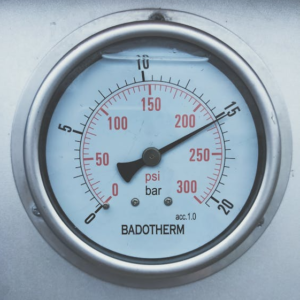
To read your boiler pressure, simply look at the built in pressure gauge. You should see a dial pointing to a number of “bar”, which is the measurement of pressure.
What pressure should my boiler be?
Boiler pressure should be between 1 and 1.5 bar when the system is cold. That gives the system enough pressure to circulate water properly, without putting strain on the components.
As the boiler heats cold water, the pressure naturally rises a little, so checking it mid-cycle can be misleading. Cool the boiler by turning it off for 30-60 minutes before you check the pressure gauge for a reliable reading.
What are the symptoms of low boiler pressure?
Low boiler pressure is one of the most common causes of heating or hot water problems, particularly on combi boilers (you can read more about the different kinds of gas boilers here). It can show up as:
- Radiators warming slowly or unevenly.
- Heating cutting out unexpectedly.
- Hot water going from cold or lukewarm and then back again unpredictably.
- The boiler not working at all.
- Sometimes the boiler will lock itself out as a safety measure, if there is a risk of damage to itself.
If you see any of those signs, check the boiler pressure gauge.
Also, if you’ve recently bled your radiators, a pressure drop is very likely and completely normal. Letting trapped air out releases a bit of pressure with it, so make it a habit to have a look at the gauge and give the pressure a top-up after radiator maintenance if it’s needed.
What causes boiler pressure to drop?
If you’re having repeated issues, there are a few common culprits:
There’s a leak somewhere in the central heating system
Even a slow drip from a radiator valve or hidden pipe can reduce water pressure over a period.
Issues with the expansion vessel
The expansion vessel absorbs pressure changes as water heats and cools to keep it stable. If it has lost its internal charge or otherwise failed, pressure levels can become turbulent and unpredictable, in either direction.
You have a trigger-happy pressure relief valve
If the pressure relief valve opens when it shouldn’t, water can escape from the system. If you see water dripping from an outside pipe, the relief valve is likely to blame.
If pressure drops once and stays steady after topping up, it’s usually nothing to worry about, but if it keeps happening, there’ll be an underlying reason, and it might be time for a professional set of eyes. Getting ahead on boiler repairs early is much cheaper than waiting for a full breakdown.
How do I raise boiler pressure safely?
Topping up boiler pressure is normally straightforward, but if you’re unsure of anything, stop and seek advice. Most modern boilers have a filling loop beneath the unit, usually a small, braided hose with one or two valves:
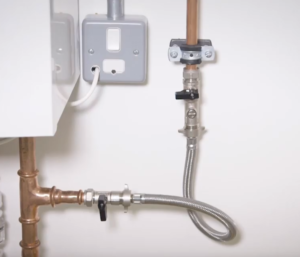
Once you have located this and can access it safely:
- Turn the boiler off and wait for it to cool.
- Slowly open the filling loop valves. Opening them too much at this stage can cause the pressure to go too high, so you want to be precise here.
- Watch the pressure gauge as it rises and close the valves once it’s within the 1-1.5 bar range.
- Turn the boiler back on.
We’ll stress it again: go slowly. Overfilling is one of the most common causes of high boiler pressure, which is a more serious issue. If the pressure goes too high, the relief valve might open up. At this point, turn the boiler off and call a Gas Safe registered engineer. Call 0117 924 7200 any time for a free quote, or read more about our services here.
What causes high boiler pressure?
Anything above 1.5 bar is on the high end, but it’s a particular worry if it’s pushing 2.5 bar or heading into the red. Some of the likely causes are:
You overfilled the pressure when topping up
It doesn’t take much to overshoot, and it can just jump up unexpectedly if you’re unlucky. If you’ve done this, you should be able to lower it again yourself (more on that below).
The expansion vessel isn’t doing its job
As we mentioned earlier, a broken expansion vessel can cause big pressure jumps or dips. If you suspect this is the problem, an engineer will need to have a look.
An open pressure relief valve
If the system pressure goes too high, the pressure relief valve opens to release water and protect the boiler. As we mentioned earlier, a telltale sign is water dripping from an outdoor pipe.
How do I lower high boiler pressure?
First, make sure you are checking the pressure when the boiler is cooled, as it’ll naturally be higher than heated. If it’s still too high, here’s what you can do:
If pressure’s high due to overfilling:
If you’ve been reading closely, you might have guessed the answer: bleeding your radiators releases a small amount of water, which brings the pressure down. To do this:
- Turn the heating off and let the system cool.
- Choose a downstairs radiator (it’s easier to control and less messy).
- Put a cloth and container under the bleed valve.
- Turn the bleed key very slightly until water starts to trickle out. You don’t need much.
- Close it again, then check the pressure gauge.
- Repeat in tiny amounts until you’re back to that 1-1.5 bar sweet spot.
If you’re a visual learner, check out this great video by Worcester Bosch. If you’re not comfortable doing it, though, don’t force it. There’s no shame in getting an expert in to have a look.
Don’t:
- Open the filling loop valves again to “balance it out”. It will make it worse.
- Tamper with internal components. That can be dangerous and should be left to the professionals.
- Ignore repeated issues. They’re a sign of a bigger problem, likely with the expansion vessel or pressure relief valve. At that stage, call in a (gas safe registered) engineer for a proper boiler repair visit. Catching an issue before it’s critical is much cheaper and less stressful than having your boiler give out completely.
Final thoughts
Boiler pressure issues are common, but you now know how to spot problems early, diagnose them, and keep your heating running smoothly, and when to leave It to the experts.
If you’re in a bind, our qualified local engineers are here to help. We support homes across Bristol, Bath and North Somerset, and have been the trusted choice for hundreds of customers for over 40 years. Give us a call on 0117 924 7200, or get in touch online here for a free quote.