
For most of the year, the boiler hums away in the background, and you think nothing of it. But come the warmer months, a lot of people start to wonder: should I actually be turning this off? It’s not heating the house, energy isn’t cheap these days, and Ofgem has confirmed a 13% rise in the price cap from July 2026, taking the typical annual bill to £1,862. Cutting back where you can makes sense.
Well, whether you should turn your boiler off depends on your boiler type, how your hot water is supplied, and how long you plan to leave it unused.
Should you turn your boiler off when you don’t need heating?
Most homes don’t need to switch the boiler off entirely in summer, but you don’t need it running the way it does in winter either. Even in the warmest months you still need hot water, so the sensible middle ground is turning the heating off while keeping the boiler available for that. How you do it depends on what kind of boiler you have.
If you have a combi boiler
A combi boiler heats water directly from the mains on demand, so leaving the boiler on in summer but switching the central heating function off is both safe and sensible. Many modern combis even have a “summer mode” setting that does this automatically, keeping hot water available without the heating ever firing.
Switching it off entirely at the mains is fine if you’re going away for an extended period, but for day-to-day summer use there’s little benefit, because you still need hot water for washing yourself and your dishes.
If you have a system boiler with a hot water cylinder
System boilers store hot water in a separate cylinder. In summer you don’t need the heating circuit at all, but you do still need the boiler to heat the cylinder. Set your programmer so the heating is off and the hot water comes on for one or two shorter periods a day, rather than the longer cycles you’d run in winter.
Stored water in a cylinder should be heated to at least 60°C regularly to prevent the risk of Legionella bacteria, which thrive below that temperature. Cutting back how often the cylinder heats is fine, but switching the boiler off entirely is a risk to you and your households’ health.
What happens if you leave your boiler unused all summer?
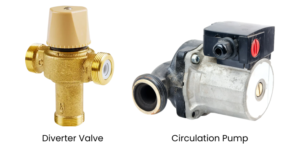
Leaving the boiler completely off for months can cause problems when you try to restart it when the weather cools. The main risk is to the:
- Diverter valves: switches heated water between your central heating and your hot water
- Circulation pump: responsible for moving water around the heating system
Both are built to be kept wet and moving, so when they sit stationary for months, corrosion can set in, or sludge can jam the mechanism. A seized pump in particular is one of the most common faults engineers find at the start of the heating season.
If you do switch the boiler off for an extended period, run it every few weeks, just long enough for the pump to turn and the water to circulate. Just fifteen minutes can prevent a costly callup come autumn.
How do I turn my boiler back on after a long break?
Switch it on and run a full heating and hot water cycle before relying on it. Check the pressure gauge first; it should sit between 1 and 1.5 bar when cold. If it lower than this, top it up via the filling loop, or if the boiler shows an error code or won’t fire, call in an engineer.
Read our blog for a detailed breakdown of how boiler pressure works and how to change it.
Why summer is the best time to get your boiler serviced
If you’ve been putting off an annual service, summer is the ideal window. Engineers aren’t stretched the way they are heading into winter, so you’re more likely to get a time that suits you. Any issues that come up get fixed now, so you’re not left without heating when it matters most.
A service checks all the key components, including the pump and valves. Engineers will clean out any build-up, and confirm the boiler is running efficiently. It also ensures your warranty remains valid. We recommend you service your boiler yearly, so if yours is due (or if you’ve never had it looked at before), book in with our team before the summer’s out.
How to turn your boiler off
Combi boilers
Find your room thermostat or programmer and set the heating to off, or remove any scheduled heating times. If your boiler has a summer mode, enable it; this tells the boiler to ignore heating calls and only fire when hot water is needed. Leave the hot water schedule running as normal.
If you’re going away and want to switch it off entirely, turn it off at the appliance and then at the mains. When you return, switch it back on, let it run through a full cycle, and check the pressure gauge before relying on it.
System boilers
Turn the heating off via your programmer or smart controls while keeping the hot water schedule running. Reduce it to one or two shorter periods a day rather than the longer runs of winter. Stored water must reach 60°C to kill all harmful bacteria, so don’t switch the cylinder heating off completely.

To wrap up
Summer is a good opportunity to get ahead. With energy bills still high and winter demand far off, a bit of thought now saves money through the warmer months and avoids a nasty surprise when you first switch the heating back on.
If your boiler is due a service, making strange noises, or you just want a professional set of eyes on it before you leave it for the season, our Gas Safe registered engineers are here to help. We’ve been looking after homes across Bristol, Bath and North Somerset at a competitive rate for over 40 years. Give us a call on 0117 924 7200, or get in touch online.